Barefoot or not, this is important.
Run with your whole body.
Since you run with your whole body, strengthen your whole body.
I'll skip the legs, because it is obvious that running is a leg exercise. I'll work my way up from there.
Hips
You've got to have strong hip abductors and adductors. These are the muscles that move your legs away from the midline and towards the midline of the body. While running, as these muscles fatigue, they lose their ability to stabilize the legs. As a result, side to side movement can occur. When the goal is to propel oneself forward, side to side movement is undesirable (obviously).
Core
Weak core muscles can be a real pain in the back. Strong core muscles hold the spine in a neutral position while running, if the spine comes out of position, the jarring motion of running can cause pain and injury to the back.
Upper back
Strong upper back muscles help maintain good running form which is necessary for running economy, speed, and endurance.
Arms
Arms drive the running movement, if you doubt this, glue your hands to your side and run. Strengthen your arms so they don't wear out early.
Neck
A weak neck causes lots of head bobbing, pain and injury follow, as well as loss of running economy.
Running strengthens and builds endurance more in the prime movers of the running motion. As a result, many runners have imbalances between those muscles and all the other muscles that have supportive roles in running. It is important that we take the time to strengthen the rest of the body as well.
Part Three
Part Two
Part One
Showing posts with label Barefoot Running. Show all posts
Showing posts with label Barefoot Running. Show all posts
Tuesday, May 7, 2013

Tuesday, April 30, 2013
Save Your Sole: Run Barefoot -- Part Three
I have heard people use these phrases when talking about good qualities of running shoes. "It really locks your foot in place." "It keeps the toes from moving around." "Has a nice firm arch. . ."
If you like those qualities, enjoy your shoes, and feel free to disagree with everything I've written in this series. To each his own.
If, on the other hand, if you want to strengthen the whole body including the foot, and you choose to do some of your runs barefoot, be prepared for your arches and your toes to get a workout they don't get in those kinds of shoes.
The human foot is awesome.
Why do we spend so much time eliminating so much of its function?
It flexes, springs, absorbs shock, returns energy to our next stride. It is an engineering marvel. If it has been allowed to atrophy, (like any other muscle) it will need some strengthening to handle the load of running.
So let's pump those piggies.
Use your toes to pick up small things. Pick up pencil erasers and put them in a can/bowl/box. Pick up a hand towel and pass it to the other foot. Clean up your kids Legos or Lincoln Logs with your feet.
Scrunch a towel. Put your feet on the towel and use your toes to pull the other end of the towel towards you. You can add weight by setting something on the end of the towel.
Barefoot strength training. Do your bodyweight squats, one legged squats, and whatever leg exercises you like barefoot.
Tap your big toe as many times as you can in 30 seconds without moving your pinky toe. Then tap your pinky toe without moving the big one.
By strengthening the intrinsic muscles of the foot, you will be helping the foot handle the stresses that running shoes insulate them from. If you want to run barefoot, or nearly barefoot this is a must.
See part one of this series here.
See part two of this series here.
If you like those qualities, enjoy your shoes, and feel free to disagree with everything I've written in this series. To each his own.
If, on the other hand, if you want to strengthen the whole body including the foot, and you choose to do some of your runs barefoot, be prepared for your arches and your toes to get a workout they don't get in those kinds of shoes.
The human foot is awesome.
Why do we spend so much time eliminating so much of its function?
It flexes, springs, absorbs shock, returns energy to our next stride. It is an engineering marvel. If it has been allowed to atrophy, (like any other muscle) it will need some strengthening to handle the load of running.
So let's pump those piggies.
Use your toes to pick up small things. Pick up pencil erasers and put them in a can/bowl/box. Pick up a hand towel and pass it to the other foot. Clean up your kids Legos or Lincoln Logs with your feet.
Scrunch a towel. Put your feet on the towel and use your toes to pull the other end of the towel towards you. You can add weight by setting something on the end of the towel.
Barefoot strength training. Do your bodyweight squats, one legged squats, and whatever leg exercises you like barefoot.
Tap your big toe as many times as you can in 30 seconds without moving your pinky toe. Then tap your pinky toe without moving the big one.
By strengthening the intrinsic muscles of the foot, you will be helping the foot handle the stresses that running shoes insulate them from. If you want to run barefoot, or nearly barefoot this is a must.
See part one of this series here.
See part two of this series here.
Wednesday, April 24, 2013
Save Your Sole: Run Barefoot -- Part Two
If you missed part one. It is here.
Now that you've strengthened and lengthened, it is time to run barefoot. So. . .
Take off your shoes and run.
As I have said before, there is no such thing as a barefoot shoe.
All the tips that you will hear about barefoot running, or running in minimal shoes become much more self evident when you get out on a hard surface with bare feet.
Listen to your body: It is much easier to hear the feedback from your feet when there are no shoes to dull their sensation of the ground.
Run slower: If you go out barefoot at top speed you'll pay for it quickly, so slow down, your bare feet will tell you if you are going slow enough.
Don't go too far: If you go out in minimal shoes, you can run for quite a long way with no pain, until the next day when your calf muscles and achilles tendon scream at you. Go barefoot and your feet will tell you when to turn around, don't ignore them, stop when it is time to stop.
Shorten your stride: Stretching your legs out and landing on your heels barefoot will hurt, listen to your body's feedback and shorten your stride accordingly.
Don't heel strike: Stretching your legs out and landing on your heels barefoot will hurt, listen to your body's feedback and shorten your stride accordingly.
Run softly and smoothly: Again listen to your feet, literally this time. Try to avoid a thumping sound or a slapping sound, run quietly, run like a ninja.
Did I mention to listen to your feet?
Now that you've strengthened and lengthened, it is time to run barefoot. So. . .
Take off your shoes and run.
As I have said before, there is no such thing as a barefoot shoe.
All the tips that you will hear about barefoot running, or running in minimal shoes become much more self evident when you get out on a hard surface with bare feet.
Listen to your body: It is much easier to hear the feedback from your feet when there are no shoes to dull their sensation of the ground.
Run slower: If you go out barefoot at top speed you'll pay for it quickly, so slow down, your bare feet will tell you if you are going slow enough.
Don't go too far: If you go out in minimal shoes, you can run for quite a long way with no pain, until the next day when your calf muscles and achilles tendon scream at you. Go barefoot and your feet will tell you when to turn around, don't ignore them, stop when it is time to stop.
Shorten your stride: Stretching your legs out and landing on your heels barefoot will hurt, listen to your body's feedback and shorten your stride accordingly.
Don't heel strike: Stretching your legs out and landing on your heels barefoot will hurt, listen to your body's feedback and shorten your stride accordingly.
Run softly and smoothly: Again listen to your feet, literally this time. Try to avoid a thumping sound or a slapping sound, run quietly, run like a ninja.
Did I mention to listen to your feet?
Tuesday, April 23, 2013
Save Your Sole: Run Barefoot -- Part One.
Well, at least toughen your sole anyway.
Spring is creeping its way north once again and people are getting outside to exercise. More and more people will go outside and lace up those running shoes and go for their first runs of the year or the their first runs ever. While it appears the "craze" part of the barefoot/nearly barefoot running thing has died down, sooner or later a new runner will be in a race or on a run in the park and see someone running barefoot, in "those toe shoes," sandals, or something that looks like slippers. A brief conversation with these minimalist runners may lead one to question what the guy at the running shoe store told them about over pronation.
There are some things to know before ditching one's shoes though. If a runner is accustomed to old there will be pain, oh yes, there will be pain.
fashioned running shoes (yeah, I said old fashioned) and enthusiastically jumps on the Tarahumara bandwagon without a solid transition,
Over the next few posts here I'll share some things to watch out for if you think you would like to switch to less shoe.
Today I'm discussing heel - toe differential. If there is a 16mm difference in the heel and toe in your shoe, your heel is 16mm (more than half an inch) higher than your toe when standing in those shoes. If you switch from this to running in a shoe with zero differential, your foot will be in a more natural position, but your muscles haven't been operating this way so there is some adjustment to be done.
If a personal training client came to me complaining of some low back discomfort, told me they had a desk job where they sat in an office chair 8-10 hours per day 5 days per week, I'd already be betting on a particular cause. I would check to see if when standing their pelvis tilted forward. Sitting all day for large portions of life will cause some changes in the muscles. The hip flexors (which pull the knee forward toward the torso will get used to the sitting position, making them shorter and tighter. Meanwhile the hamstrings, getting used to their new position will lengthen and become looser. This is what causes the unnatural position of the pelvis and therefore the lower back pain. Stretches and exercises would have to be done to correct the muscle imbalances.
The same goes for the foot.
Changing the angle the foot with shoes that lift the heel off the ground allow the calf and hamstrings to stretch less, therefore they shorten and tighten. A sudden change in how far those muscles have to stretch could overload the muscles and tendons causing calf pain or injury, hamstring pain or injury, achilles tendon pain or injury. . .
Don't give up though, there is hope.
First of all, thanks to the pendulum swing towards barefoot, and the swing back looking for balance, it is pretty easy these days to find out what the heel-toe differential in your shoe is. If you've been running in a 16mm drop shoe and you want to make a change you don't have to go to zero. Talk to your trusted running shoe person about your goals and they can help you find a shoe with a less high heel.
Another tool in your toolbox is stretching. Find a good stretching routine to lengthen your hamstring and calf muscles. You will here a lot about how stretching doesn't prevent injury and impedes performance, and how you shouldn't stretch before a workout. The purpose of stretching is to improve the range of motion. In this case, a runner needs to improve the range of motion, so after a workout, stretch those calves.
Strengthening. Running requires eccentric contractions of the calf muscles on each footfall. Get those calves ready with some good strengthening exercises. Meanwhile, since we are lengthening the calves with stretching, lets also strengthen the front of the leg with some exercises for the anterior tibialis.
Slow down, and shorten your run. If you switch from a 40 pound weight to a 50 pound weight you would reduce your repetitions. The same applies here, the muscles are working more on each footfall, so give them fewer footfalls at a slower pace.
Use these tips and you can start a transition to a more natural running style. This is only one aspect of the difference between old fashioned running shoes and much older fashioned running on your feet, so stay tuned for more.
Spring is creeping its way north once again and people are getting outside to exercise. More and more people will go outside and lace up those running shoes and go for their first runs of the year or the their first runs ever. While it appears the "craze" part of the barefoot/nearly barefoot running thing has died down, sooner or later a new runner will be in a race or on a run in the park and see someone running barefoot, in "those toe shoes," sandals, or something that looks like slippers. A brief conversation with these minimalist runners may lead one to question what the guy at the running shoe store told them about over pronation.
There are some things to know before ditching one's shoes though. If a runner is accustomed to old there will be pain, oh yes, there will be pain.
fashioned running shoes (yeah, I said old fashioned) and enthusiastically jumps on the Tarahumara bandwagon without a solid transition,
Over the next few posts here I'll share some things to watch out for if you think you would like to switch to less shoe.
 |
| These are close, but still not barefoot. |
If a personal training client came to me complaining of some low back discomfort, told me they had a desk job where they sat in an office chair 8-10 hours per day 5 days per week, I'd already be betting on a particular cause. I would check to see if when standing their pelvis tilted forward. Sitting all day for large portions of life will cause some changes in the muscles. The hip flexors (which pull the knee forward toward the torso will get used to the sitting position, making them shorter and tighter. Meanwhile the hamstrings, getting used to their new position will lengthen and become looser. This is what causes the unnatural position of the pelvis and therefore the lower back pain. Stretches and exercises would have to be done to correct the muscle imbalances.
The same goes for the foot.
Changing the angle the foot with shoes that lift the heel off the ground allow the calf and hamstrings to stretch less, therefore they shorten and tighten. A sudden change in how far those muscles have to stretch could overload the muscles and tendons causing calf pain or injury, hamstring pain or injury, achilles tendon pain or injury. . .
Don't give up though, there is hope.
First of all, thanks to the pendulum swing towards barefoot, and the swing back looking for balance, it is pretty easy these days to find out what the heel-toe differential in your shoe is. If you've been running in a 16mm drop shoe and you want to make a change you don't have to go to zero. Talk to your trusted running shoe person about your goals and they can help you find a shoe with a less high heel.
Another tool in your toolbox is stretching. Find a good stretching routine to lengthen your hamstring and calf muscles. You will here a lot about how stretching doesn't prevent injury and impedes performance, and how you shouldn't stretch before a workout. The purpose of stretching is to improve the range of motion. In this case, a runner needs to improve the range of motion, so after a workout, stretch those calves.
Strengthening. Running requires eccentric contractions of the calf muscles on each footfall. Get those calves ready with some good strengthening exercises. Meanwhile, since we are lengthening the calves with stretching, lets also strengthen the front of the leg with some exercises for the anterior tibialis.
Slow down, and shorten your run. If you switch from a 40 pound weight to a 50 pound weight you would reduce your repetitions. The same applies here, the muscles are working more on each footfall, so give them fewer footfalls at a slower pace.
Use these tips and you can start a transition to a more natural running style. This is only one aspect of the difference between old fashioned running shoes and much older fashioned running on your feet, so stay tuned for more.
Friday, April 19, 2013
No Such Thing As Barefoot Shoes

I remember buying my first pair of Vibram Fivefingers. I went to the running store because my wife had said, "If you're going to be running now, you need to go get fitted for running shoes." The shoes that were suggested for me felt like I was running on a mattress. In a way that was a nice feeling, but at the same time something felt. . . wrong. I had a friend that did kettlebells in VFFs so I asked about the weird little toe shoes. I tried them on and they felt right. And so it began, not just my foray into minimalist running, but a long term frustration with the term "barefoot shoes". Before I even checked out, someone asked me if I was into barefoot running. I was wearing shoes, I was buying shoes to wear, and I was asked about barefoot running. Little did I know there was a barefoot running trend rolling up and about to seriously shake up the shoe industry as top brands struggled to define minimalist shoes and barefoot shoes.

There is no such thing as a barefoot shoe. This is more than a question of semantics. I don't need a dictionary to tell you that barefoot means your foot is bare. I'm not just being picky about what the word barefoot really means. I'm not trying to say nearly barefoot shoes are a bad thing. I happen to really enjoy running in mine. The point I am getting to is that running barefoot is different than anything else, no matter how well designed the shoe is, now matter how closely it resembles barefoot, it is not the same as running barefoot. I have begun supplementing my nearly barefoot running with more and more actually barefoot running.
I discovered last winter, that the more shoe I have on, the more sore I get from running. It took me quite a while longer to figure out why. Having never had a running coach, or even time for a running club, the only feedback I've had on my running is my own research and my own running. I've learned a lot from experimentation and I've learned the most from taking my shoes off.
My Xeroshoes huaraches showed me that I had a heel whip. When I sat my foot down in my stride and my heel landed off the sole of the sandal, I knew something was wrong. When I got on the treadmill barefoot, I really started to learn. If you run barefoot, and your foot twists while in contact with the ground. Unless you just ignore the feedback from your foot, you will feel it. If your foot skids forward on landing, you will feel the friction. If you push off with your toes instead of lifting your foot, you will know it.

I don't believe this is always a bad thing. In fact, if I am running for time, I will be running in some sort of shoe. If I want to PR a 5K I am not so much worried that day about authentic barefoot running, I am going to insulate my feet so it will take more than a sliver of glass to stop my race.
I do believe, however that EVERY runner should spend some time barefoot. You will learn a lot from your feet.
Saturday, April 13, 2013
How To Choose The Shoe For You
It's that time of year again. The weather is warming up, people are getting outside, getting active, starting running and asking all sorts of questions about how to do it right.
Common question: "What shoes should I wear for running?"
Smart Alec answer: "Whatever shoes are best for you."
Serious answer: "Whatever shoes are best for you."
If you go online and ask what shoes you should wear, a lot of people are going to answer by telling you what kind of shoe they should wear. This information is useless to you unless you are a body snatcher and you plan on taking over there body to go for a run.
So, all you new runners, here is how to pick a shoe.
1. Forget about shoes for a minute, think about your body. Running builds a strong healthy body, but also requires a strong healthy body. Spend two to three days per week strengthening your body. Strengthen your feet, calves, hamstrings, glutes, quadriceps, hip flexors, hips, core, while your at it give the upper body some love too. You'd be amazed how tired your shoulders can get from running.
2. Run barefoot. You don't have to run barefoot everywhere you go, you don't have to run barefoot on concrete, but you will learn so much about running from some barefoot runs.
3. Go to a running specialty store. Not Foot Locker, not Dunham's, somewhere that employs a bunch of runners. If you aren't sure if it is a specialty running store go in and say to the first person you see, "What are you training for?" Their answer will let you know if they are a runner.
4. Tell them what you are looking for, they should watch you run a bit before they recommend a shoe. Try on the shoe they recommend. If it does not feel comfortable, tell them everything you don't like about the shoe. Repeat this process until your feet feel heavenly.
5. Don't forget to run barefoot.
Common question: "What shoes should I wear for running?"
Smart Alec answer: "Whatever shoes are best for you."
Serious answer: "Whatever shoes are best for you."
If you go online and ask what shoes you should wear, a lot of people are going to answer by telling you what kind of shoe they should wear. This information is useless to you unless you are a body snatcher and you plan on taking over there body to go for a run.
So, all you new runners, here is how to pick a shoe.
1. Forget about shoes for a minute, think about your body. Running builds a strong healthy body, but also requires a strong healthy body. Spend two to three days per week strengthening your body. Strengthen your feet, calves, hamstrings, glutes, quadriceps, hip flexors, hips, core, while your at it give the upper body some love too. You'd be amazed how tired your shoulders can get from running.
2. Run barefoot. You don't have to run barefoot everywhere you go, you don't have to run barefoot on concrete, but you will learn so much about running from some barefoot runs.
3. Go to a running specialty store. Not Foot Locker, not Dunham's, somewhere that employs a bunch of runners. If you aren't sure if it is a specialty running store go in and say to the first person you see, "What are you training for?" Their answer will let you know if they are a runner.
4. Tell them what you are looking for, they should watch you run a bit before they recommend a shoe. Try on the shoe they recommend. If it does not feel comfortable, tell them everything you don't like about the shoe. Repeat this process until your feet feel heavenly.
5. Don't forget to run barefoot.
Tuesday, March 19, 2013
Again, Study Quantifies the Obvious.
Runner's World also put this one out there, it really relates to the other one.
http://www.runnersworld.com/running-shoes/how-type-shoe-changes-young-runners-form
http://www.runnersworld.com/running-shoes/how-type-shoe-changes-young-runners-form
New Study Quantifies Common Sense
Well of course, I already knew this from personal experience, but now there is a study that puts it out there as being more than just my personal experience.
http://www.tandfonline.com/doi/abs/10.1080/19424280.2012.742141?journalCode=tfws20
Basically it says that the harder the surface, the more likely there will be a forefoot strike.
Credit to Runnersworld.com for finding the article for us.
http://www.tandfonline.com/doi/abs/10.1080/19424280.2012.742141?journalCode=tfws20
Basically it says that the harder the surface, the more likely there will be a forefoot strike.
Credit to Runnersworld.com for finding the article for us.
Friday, March 15, 2013
Over the River and Through the Woods
Here goes. I've got to make this sound dramatic.
In a day and a half I will be doing my second half marathon. I'll be running the same race as I did one year ago, The Fall Creek Falls Trail Half Marathon. 13.1 miles. Last year I actually ran a little farther than that (report here). I finished in 2:12:00.

This year I do it again. I like races. I enjoy the camaraderie, the spirit of competition, being out on the trail giving it my all. I don't care (much) about beating the other racers, but I sure do enjoy competing with them. What I'm really hoping for (aren't we all?) is a personal best. Honestly, I'd like to break under two hours.
There is rain in the forecast. That might slow me down, the trails could be sloppy and slippy and treacherous. I'll keep on running though.
I seriously considered asking to borrow my stepdaughter's GPS watch to help me keep track of my pace, but then I changed my mind. I want to do this based on effort. I want to control my pace by listening to my body. I want to attempt to run the speed I need to run to meet my goal without constant electronic feedback. I will have time goals for each aid station, but that is all.
I'm not sure why, but I like the primalness of trail running, I like getting closer to nature, I don't want to be interrupted by an electronic guide even if it will help me monitor my pace. That is part of why I wear minimal shoes. I don't want to rely on running shoe technologies like Biomogo or progressive diagonal rollbars. I want my feet and legs, and heart and lungs and mind to run the race. Yes, I'll wear a stopwatch, and I'll be eating some gels, but that is about as advanced as my technology will be. If I could find honey in convenient 100 calorie squeeze tubes I would probably just use honey. If Mandarin "cuties" weren't so bulky I might use those, but for now I'll stick with the gels.

And I will run step by step, breath by breath. I will run through the woods, up and down the trails, along the ridges, through the creeks across suspended bridges until I reach the end.
And 1:59:59 or not I will finish smiling.
Results will be available here. http://www.my-finish.com/form.php?race_name=fcftr
In a day and a half I will be doing my second half marathon. I'll be running the same race as I did one year ago, The Fall Creek Falls Trail Half Marathon. 13.1 miles. Last year I actually ran a little farther than that (report here). I finished in 2:12:00.

This year I do it again. I like races. I enjoy the camaraderie, the spirit of competition, being out on the trail giving it my all. I don't care (much) about beating the other racers, but I sure do enjoy competing with them. What I'm really hoping for (aren't we all?) is a personal best. Honestly, I'd like to break under two hours.
There is rain in the forecast. That might slow me down, the trails could be sloppy and slippy and treacherous. I'll keep on running though.
I seriously considered asking to borrow my stepdaughter's GPS watch to help me keep track of my pace, but then I changed my mind. I want to do this based on effort. I want to control my pace by listening to my body. I want to attempt to run the speed I need to run to meet my goal without constant electronic feedback. I will have time goals for each aid station, but that is all.
I'm not sure why, but I like the primalness of trail running, I like getting closer to nature, I don't want to be interrupted by an electronic guide even if it will help me monitor my pace. That is part of why I wear minimal shoes. I don't want to rely on running shoe technologies like Biomogo or progressive diagonal rollbars. I want my feet and legs, and heart and lungs and mind to run the race. Yes, I'll wear a stopwatch, and I'll be eating some gels, but that is about as advanced as my technology will be. If I could find honey in convenient 100 calorie squeeze tubes I would probably just use honey. If Mandarin "cuties" weren't so bulky I might use those, but for now I'll stick with the gels.

And I will run step by step, breath by breath. I will run through the woods, up and down the trails, along the ridges, through the creeks across suspended bridges until I reach the end.
And 1:59:59 or not I will finish smiling.
Results will be available here. http://www.my-finish.com/form.php?race_name=fcftr
Wednesday, January 23, 2013
New Kicks From New Balance
Leave it to a married pair of runners to turn a date into a running shoe shopping trip.
I dropped off our little girl at Grandma's house, then headed over to the elementary school my wife where my wife teaches. We headed into town and would up making a short stop at a store called Hyder's that sells factory second shoes. A pair of Inov-8 shoes caught her eye, but they were too small, then we wound up each finding a pair of New Balance Minumus MO10s that fit. We spent a total of $60 for two pairs of shoes.
Did I really need another pair of shoes?

I had decided I didn't really need another pair of shoes. I was planning on getting through this winter with what I had, but I kind of wanted a pair of shoes good for cold weather, more waterproof than my VFFs (not hard to find that) but still minimal. The Merrell Sonic Glove was on my radar as was the VFF Lontra, but being on a budget was a deterrent there unless I found a great deal.
The MO10 seemed to fit the bill, so I quickly checked the ankle cuff to see if it had the same problem I found with the NB Minimus Trail Zero pair that I returned. The cuff was sewn in so no problem there. They were a size larger than my size, but I often go up a size to accomodate my forefoot. Even in minimal shoes with a wider toe box, I have trouble getting a good fit just behind my toes. (My wife has the same issue.) I tried them on, liked the feel and bought them.
This shoe has a 4mm drop from heel to toe, more cushioning than any of my other shoes, and a slight arch support. I was concerned about these factors, but so far they have not shown a problem for me. In fact as I am still recovering from a couple of injuries (I think my glute/hamstring issue is the root of my plantar issue in my left foot,) This slightly more supportive shoe has been leaving me less sore the day after a run. I was also concerned about the band across the forefoot causing a problem with my wide foot, but it turns out not to be an issue for me. It does, however cause an issue for my wife. Perhaps if she went a size up or found a wide width version she would be OK.
Warm and dry.

These shoes have a gusseted tongue and water resistant upper so these will be my go to shoes for wet or cold weather. While there are plenty of folks running in snow in Five Fingers, I hate having soggy toes, and am a weenie about the cold. I've been wearing them about in temperatures in the lower 20's Farenheit and they provide adequate warmth, especially if I add socks to the mix.
Too much shoe?

I've been working on improving my form as I think that some of my soreness is due to my twisty duckfeet. So I was concerned about a shoe that has more cushion and support might allow me to relapse into poor form. I was excited to try them out on a run though, so I got ready for my long run wearing my new shoes. Just in case of unforeseen problems with the shoes, I threaded a race belt through my Xero Shoes huaraches, so that I could change shoes if the need were to arise.
So how was the run?
 I was able to run the full distance in my new shoes with no problems, and as an added bonus, there was no soreness the next day. these are the only shoes I run in now, that I continually notice while they are on my foot. There was much less ground feel than my VFF Treksports, Bikilas, or Soft Star Dash Runamoc. I could also feel the arch support and the elevated heel. There was not so much heel lift as to cause heel striking while running, but I have found myself scuffing my heel occasionally while walking in them. I also noticed that my foot does not get cold in them. I don't know if this will become an issue for running in hot weather, but I am not concerned as my intent is to wear this shoe for cold and/or wet weather.
The other use I will have for this shoe is as a casual shoe. I like to have shoes that serve multiple purposes, until they finally wore through the upper after nearly two years of use, my black Treksports were my all-purpose shoe. The only two complaints I had with them was they were not all weather, and I was a constant walking FAQ for Vibram Five Fingers. I feel like these shoes will blend in better than toe shoes.
Summing it up.
These shoes have a soft comfortable upper that I like with or without socks. Sized up they give me enough toe room while being a little long. The length is not a big issue because of the slight toe spring lifting the end of the shoe over obstacles. The sole is flexible, less than my other minimal shoes, but sufficiently flexible. The heel lift and arch support I generally think of as negatives, but they appear to be helping me keep running minimal while recovering from injuries. This shoe should be good for someone interested in heading towards a more barefoot shoe, but not quite ready to go all the way minimal. It had earned a place in my shoe rotation, especially through the cold winter and wet spring.
I dropped off our little girl at Grandma's house, then headed over to the elementary school my wife where my wife teaches. We headed into town and would up making a short stop at a store called Hyder's that sells factory second shoes. A pair of Inov-8 shoes caught her eye, but they were too small, then we wound up each finding a pair of New Balance Minumus MO10s that fit. We spent a total of $60 for two pairs of shoes.
Did I really need another pair of shoes?

I had decided I didn't really need another pair of shoes. I was planning on getting through this winter with what I had, but I kind of wanted a pair of shoes good for cold weather, more waterproof than my VFFs (not hard to find that) but still minimal. The Merrell Sonic Glove was on my radar as was the VFF Lontra, but being on a budget was a deterrent there unless I found a great deal.
The MO10 seemed to fit the bill, so I quickly checked the ankle cuff to see if it had the same problem I found with the NB Minimus Trail Zero pair that I returned. The cuff was sewn in so no problem there. They were a size larger than my size, but I often go up a size to accomodate my forefoot. Even in minimal shoes with a wider toe box, I have trouble getting a good fit just behind my toes. (My wife has the same issue.) I tried them on, liked the feel and bought them.
This shoe has a 4mm drop from heel to toe, more cushioning than any of my other shoes, and a slight arch support. I was concerned about these factors, but so far they have not shown a problem for me. In fact as I am still recovering from a couple of injuries (I think my glute/hamstring issue is the root of my plantar issue in my left foot,) This slightly more supportive shoe has been leaving me less sore the day after a run. I was also concerned about the band across the forefoot causing a problem with my wide foot, but it turns out not to be an issue for me. It does, however cause an issue for my wife. Perhaps if she went a size up or found a wide width version she would be OK.
Warm and dry.

These shoes have a gusseted tongue and water resistant upper so these will be my go to shoes for wet or cold weather. While there are plenty of folks running in snow in Five Fingers, I hate having soggy toes, and am a weenie about the cold. I've been wearing them about in temperatures in the lower 20's Farenheit and they provide adequate warmth, especially if I add socks to the mix.
Too much shoe?

I've been working on improving my form as I think that some of my soreness is due to my twisty duckfeet. So I was concerned about a shoe that has more cushion and support might allow me to relapse into poor form. I was excited to try them out on a run though, so I got ready for my long run wearing my new shoes. Just in case of unforeseen problems with the shoes, I threaded a race belt through my Xero Shoes huaraches, so that I could change shoes if the need were to arise.
So how was the run?

The other use I will have for this shoe is as a casual shoe. I like to have shoes that serve multiple purposes, until they finally wore through the upper after nearly two years of use, my black Treksports were my all-purpose shoe. The only two complaints I had with them was they were not all weather, and I was a constant walking FAQ for Vibram Five Fingers. I feel like these shoes will blend in better than toe shoes.
Summing it up.
These shoes have a soft comfortable upper that I like with or without socks. Sized up they give me enough toe room while being a little long. The length is not a big issue because of the slight toe spring lifting the end of the shoe over obstacles. The sole is flexible, less than my other minimal shoes, but sufficiently flexible. The heel lift and arch support I generally think of as negatives, but they appear to be helping me keep running minimal while recovering from injuries. This shoe should be good for someone interested in heading towards a more barefoot shoe, but not quite ready to go all the way minimal. It had earned a place in my shoe rotation, especially through the cold winter and wet spring.
Thursday, January 10, 2013
Only Run On Natural Surfaces
Not the "natural surfaces only" line again.
I don't know how many times I've been told that I can't run on man made surfaces without "properly cushioned" shoes.
If natural surfaces are so much easier for running why does EVERY track meet have a man made surface?
Oh, you meant a golf course when you said natural surface? I see, that would be a man made surface. The rock trails at Mammoth Cave National Park would be natural surfaces.
As I run on the roads around my house, I sometimes have to hop over onto the natural surfaces as cars come by. These natural surfaces include bare limestone, prickly pear cactuses, and fields of chest high wildflowers and prairie grasses.
When I trail run at Mammoth Cave it gets so much faster and easier when I hit the boardwalks and sidewalks.
I think most people that tell me to run on natural surfaces have never run on natural surfaces and never run in anything but heavily cushioned shoes.
I happen to love natural surfaces, but not because they are easier to run on. I love them because they are harder to run on. Running on trails forces me to use more awareness, better technique, a larger variety of movements and therefore a larger variety of muscles.
So yeah, run on natural surfaces, then when you need some active recovery take it easy on a sidewalk.
I don't know how many times I've been told that I can't run on man made surfaces without "properly cushioned" shoes.
If natural surfaces are so much easier for running why does EVERY track meet have a man made surface?
Oh, you meant a golf course when you said natural surface? I see, that would be a man made surface. The rock trails at Mammoth Cave National Park would be natural surfaces.
As I run on the roads around my house, I sometimes have to hop over onto the natural surfaces as cars come by. These natural surfaces include bare limestone, prickly pear cactuses, and fields of chest high wildflowers and prairie grasses.
When I trail run at Mammoth Cave it gets so much faster and easier when I hit the boardwalks and sidewalks.
I think most people that tell me to run on natural surfaces have never run on natural surfaces and never run in anything but heavily cushioned shoes.
I happen to love natural surfaces, but not because they are easier to run on. I love them because they are harder to run on. Running on trails forces me to use more awareness, better technique, a larger variety of movements and therefore a larger variety of muscles.
So yeah, run on natural surfaces, then when you need some active recovery take it easy on a sidewalk.
 |
| Natural Surface |
 |
| Man Made Surface |
Monday, January 7, 2013
She Begged, I Gave In.
She begged me.
I told her it was too cold.
She said it was just for the treadmill.
I relented.
I tied her huaraches.
She ran.
I told her it was too cold.
She said it was just for the treadmill.
I relented.
I tied her huaraches.
She ran.
Tuesday, November 27, 2012
Why I Run In "Barefoot" Shoes
First, I'll say it again. I am very disappointed that the phrase "barefoot shoes" has caught on. Barefoot means roughly "not wearing shoes" so barefoot shoes would be the shoes one wears when not wearing shoes.
I guess I need to get over it.
This line of thinking got back in my head after talking to a few different runners who don't think minimal shoes are good for running. I tend to discuss this subject mostly with other people who run either barefoot or nearly barefoot, so I forget how weird it still seems to others.
I never intended to join the barefoot/minimalist running craze. In fact I didn't even know there was one when I got my first pair of VFFs. As I was checking out with my Bikilas, someone else in the store asked me, "So do you do barefoot running?" I was confused. How could my purchase of a pair of shoes lead someone to think I'd be running barefoot? He quickly followed his first question with, "What do you expect to accomplish in shoes like that?" I was still confused, I was very new to running and had not been indoctrinated into believing that I needed shoes with a medial post, or that running in traditional running shoes would cause me to go blind from too much heel striking. I just knew that when I ran in the shoes I was running in it felt bad, and running in these shoes felt good.
Looking back on it a year and half later I can say this.
With no running training whatsoever, I was a sloppy runner. The less shoe I wear, the less sloppy my running. The less sloppy my running the less I hurt. The less I hurt the more I run. That is why I wear weird looking toe shoes, moccasins, and sandals to run.
And here is the evidence.
I guess I need to get over it.
This line of thinking got back in my head after talking to a few different runners who don't think minimal shoes are good for running. I tend to discuss this subject mostly with other people who run either barefoot or nearly barefoot, so I forget how weird it still seems to others.
I never intended to join the barefoot/minimalist running craze. In fact I didn't even know there was one when I got my first pair of VFFs. As I was checking out with my Bikilas, someone else in the store asked me, "So do you do barefoot running?" I was confused. How could my purchase of a pair of shoes lead someone to think I'd be running barefoot? He quickly followed his first question with, "What do you expect to accomplish in shoes like that?" I was still confused, I was very new to running and had not been indoctrinated into believing that I needed shoes with a medial post, or that running in traditional running shoes would cause me to go blind from too much heel striking. I just knew that when I ran in the shoes I was running in it felt bad, and running in these shoes felt good.
Looking back on it a year and half later I can say this.
With no running training whatsoever, I was a sloppy runner. The less shoe I wear, the less sloppy my running. The less sloppy my running the less I hurt. The less I hurt the more I run. That is why I wear weird looking toe shoes, moccasins, and sandals to run.
And here is the evidence.
Me running in shoes.
Me running in much less shoe.
Sunday, November 11, 2012
Running In Xero Shoes Huaraches
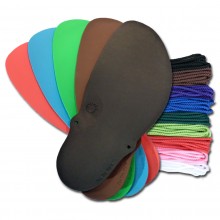 Thanks to Kentucky's version of November weather, (sometimes below freezing, sometimes above 70F) I've been able to put some miles on my new Xero Shoes huarache running sandals. It was a rather different shoe buying experience. Like most shoes there are colors to choose from, but with the Xero Shoes you also have the option of sending them a tracing of your foot and letting them finish your sandals or getting the kit and doing it yourself. I chose to do it myself. The final decision I had to make was whether to get the 6mm contact sole or the 4mm connect sole. I chose 6mm and am glad I did. Even at 6mm these huaraches have better groundfeel than my VFF Bikilas, VFF Treksports, or my SoftStar Runamoc Dash with 5mm sole. In short, these are the most barefoot soles of any of my running shoes.
The Kit
The kit came in a flat little package, it included the soles, two strings, a hole punch tool, and a pamphlet with the basics of how to put them together. I had been all over the videos on the Xero Shoes website so I was pretty confident on putting the shoes together myself, it took me about 15 minutes to complete them.
Tying and Running
I'm putting tying and running together because I feel that they are pretty inseperable with this type of shoe. There are lots of options on how one could tie huaraches. There are several video tutorials at the Xero Shoes website, some by the makers, some by users. I reccomend trying several different methods out to see what you like best. Each method has its strengths and weaknesses and every foot is different.
Running in huaraches is different. Modern running shoes are often designed to cushion, protect, and coddle the feet. Huaraches are not. They are designed to put a piece of material between your foot and the ground to protect the foot from abrasion and pointy things. Modern running shoes will protect your foot from bad running form with padding, cushioning, and other features, huaraches will tattle on your running form like a 3 year old at preschool. This to me is the number one reason to run in them.
If you push off (toe off) too much, the string around your ankle will tighten and let you know what you are doing, if on footstrike your foot is skidding into place instead of setting down, the string between the toes will press in and tell on you. If you have an odd twist to your foot like I do (did?) The strings around the sides of the feet will tell on you.
This next sentence is why I really love my Xero Shoes.
When I wear my Xeroes, I don't make as many running form mistakes because I get instant feedback from my shoes when I do.
My Xero Shoes are becoming a coaching tool, and I believe that my running form is improving and becoming more efficient from running in them. It isn't automatic, they don't magically fix the problems with running form, they just let me know there is a problem. I have to listen. I don't care if your coach is Alberto Salazar, if you don't listen to what he is saying, you won't benefit. This is a mistake some "barefoot runners" have made. They throw on a minimal shoe, call themselves barefoot, and keep running as they always have. It is vitally important when going minimal or barefoot to listen to your body's feedback.
Customer Service
I have to mention the customer service from Xero Shoes. No other shoe that I've ever had did I get free advice about my blog from the CEO of the shoe company, and only one other shoe company has been as hands on with recommendations and advice about their shoes. Steven Sashen has made all sorts of resources available on the Xero Shoes website, on the user forums, on his blog, through emails, and even over the phone. Absolute above and beyond customer service.
In Short
Quick summary:
Xero Shoes
Even the thicker 6mm version has better ground feel than the VFF Bikila.
Has the most breathable upper of any running shoe I've ever seen. (The upper is a string so. . .)
When my form is good, and the laces are dialed in correctly, I almost forget I have shoes on.
When my form is bad, I hear about it immediately.
Even if you are not a minimal, or barefoot running person, I recommend getting a pair and doing occasional short form training sessions in them. They are a lot more affordable than a high speed camera and professional coach.
Wednesday, October 31, 2012
Xero Shoes First Look
My first impression after receiving my Xero Shoes huaraches are very good. I ordered the 6mm sole for two reasons, I wanted longer wear, and I am still interested in a little more sole between my sole and the road.
I've done a three mile easy run, some even easier jogs with my daughter and dog, some walking on trails, and some casual wear in these sandals. Right now, I have a VFF Bikila on one foot and a Xero on the other.
I can't help but compare "barefoot shoes" of all types with my VFFs simply because they are the first that I used so they are my frame of reference.

The upper on the Xero Shoes is definitely more breathable. Of course, the upper is a string, so that is kind of obvious. The only thing to really compare then is the sole. The VFF Bikila has a pretty flexible sole, the segmented rubber area helps a lot with that, the 6mm Xero Shoe is a single piece of rubber and has a little less flexibility than the Bikila. I'd like to see sometime how the 4mm compares. The VFF also flexes much better at the toes due of course to the individual toes.
Despite being slightly less flexible than my Bikilas the Xero Shoe actually has better ground feel. I feel more texture under my feet, and I better feel what my foot is doing when it contacts the ground. This leads me to what I feel is the single biggest reason to run in huaraches at least every once in a while.
I have recently discovered a problem with my running form. I suspected it from examining the soles of my VFF's and SoftStar Runamoc Dash shoes, but I confirmed it for sure while running in my Xero Shoes.
I have duck feet.
Not webbed toes, obviously, or I couldn't run in VFFs. What I mean is that my feet land with my toes pointed outward. I first realized I walked that way when I took a snow picture of footprints from my daughter and me walking through the snow. Her toes pointed in the direction she was going, mine pointed way out to the sides.
Looking at videos of me running before going minimal, not only did I heel strike, but my duckfootedness resulted in a zigzag pattern to my running stride. When I went minimal, a lot of this was corrected because I switched to a forefoot strike, but I have a degree of twist when I land. I start off with toes out, heels in, then my foot twists slightly to line up with my direction of travel. I saw evidence of this on the wear pattern in my shoes, but the huaraches give me immediate feedback of this with every step. I can feel the twist happening, and when it is extreme, my heel actually presses against the strings of the huarache and nearly steps off the edge of the sole. This twist is something I didn't even figure out on barefoot runs. I knew there was friction on my foot, but I couldn't pin it down.
Number one reason to run in huaraches? They are the biggest tattle tail on my running form. If I skid forward on landing, the string between my toes tells me so. If I push off too much with my toes, the string around my heel tells me so. If I twist the strings around the side tell me so.
Instant feedback with every step, and the most barefoot feeling shoe I've ever tried. Just those two factors give me all the reason I need to run in Xero shoes.
There is one more thing though. VFF Bikilas run $100 a pair and last me about 1000 miles before the inside starts to give me toe blisters. Xero Shoes run less than $30 a pair and have a 5,000 mile warranty. As I am on a budget, this matters to me. Bikilas cost me ten cents per mile. Xero Shoes,
six tenths of a penny per mile.
I've done a three mile easy run, some even easier jogs with my daughter and dog, some walking on trails, and some casual wear in these sandals. Right now, I have a VFF Bikila on one foot and a Xero on the other.
I can't help but compare "barefoot shoes" of all types with my VFFs simply because they are the first that I used so they are my frame of reference.
The upper on the Xero Shoes is definitely more breathable. Of course, the upper is a string, so that is kind of obvious. The only thing to really compare then is the sole. The VFF Bikila has a pretty flexible sole, the segmented rubber area helps a lot with that, the 6mm Xero Shoe is a single piece of rubber and has a little less flexibility than the Bikila. I'd like to see sometime how the 4mm compares. The VFF also flexes much better at the toes due of course to the individual toes.
Despite being slightly less flexible than my Bikilas the Xero Shoe actually has better ground feel. I feel more texture under my feet, and I better feel what my foot is doing when it contacts the ground. This leads me to what I feel is the single biggest reason to run in huaraches at least every once in a while.
I have recently discovered a problem with my running form. I suspected it from examining the soles of my VFF's and SoftStar Runamoc Dash shoes, but I confirmed it for sure while running in my Xero Shoes.
I have duck feet.
Not webbed toes, obviously, or I couldn't run in VFFs. What I mean is that my feet land with my toes pointed outward. I first realized I walked that way when I took a snow picture of footprints from my daughter and me walking through the snow. Her toes pointed in the direction she was going, mine pointed way out to the sides.
Looking at videos of me running before going minimal, not only did I heel strike, but my duckfootedness resulted in a zigzag pattern to my running stride. When I went minimal, a lot of this was corrected because I switched to a forefoot strike, but I have a degree of twist when I land. I start off with toes out, heels in, then my foot twists slightly to line up with my direction of travel. I saw evidence of this on the wear pattern in my shoes, but the huaraches give me immediate feedback of this with every step. I can feel the twist happening, and when it is extreme, my heel actually presses against the strings of the huarache and nearly steps off the edge of the sole. This twist is something I didn't even figure out on barefoot runs. I knew there was friction on my foot, but I couldn't pin it down.
Number one reason to run in huaraches? They are the biggest tattle tail on my running form. If I skid forward on landing, the string between my toes tells me so. If I push off too much with my toes, the string around my heel tells me so. If I twist the strings around the side tell me so.
Instant feedback with every step, and the most barefoot feeling shoe I've ever tried. Just those two factors give me all the reason I need to run in Xero shoes.
There is one more thing though. VFF Bikilas run $100 a pair and last me about 1000 miles before the inside starts to give me toe blisters. Xero Shoes run less than $30 a pair and have a 5,000 mile warranty. As I am on a budget, this matters to me. Bikilas cost me ten cents per mile. Xero Shoes,
six tenths of a penny per mile.
Electric Wheelchairs
Electric wheelchairs make running a 5K, 10K, half marathon, whatever easier and more comfortable for inexperienced runners. If a runner has poor running form and is concerned about injuries from running, electric wheelchairs may cushion and protect the runner from impact forces, as well as stepping on sharp things.
I am willing to bet that a person uses less oxygen racing any distance by racing in electric wheelchairs.
Electric wheelchairs prevent overpronation, and oversupination.
Given this information, shouldn't everyone be racing in electric wheelchairs.
Did I say electric wheelchairs? I meant modern running shoes.
I am willing to bet that a person uses less oxygen racing any distance by racing in electric wheelchairs.
Electric wheelchairs prevent overpronation, and oversupination.
Given this information, shouldn't everyone be racing in electric wheelchairs.
Did I say electric wheelchairs? I meant modern running shoes.
Wednesday, October 17, 2012
Barefoot Running: Is it really better?
The results are in!
Studies have been conducted, performances have been examined, runners and coaches and podiatrists have been surveyed.
Even the studies are being studied.
It turns out that barefoot running is:
more injurious than shod,
less inurious than shod,
more efficient than shod,
less efficient than shod,
bad for your feet,
good for your feet.
It all depends on which study you pick.
So I would like to remind anyone who is reading this of a couple of things.
When you see an article that starts with something like, "Studies show that there is no one best way to run, with even elite long-distance runners showing a variety of styles - but wearing lightweight shoes is better than none," you should go past the headline, and read the article. If it is a news article you should then find the studies that were cited, when you read the study, it is a good idea to think critically about their methodology and see if there are possible flaws in the study, it is also a good idea to see if other studies support that study or refute it.
Short version: Headlines have one purpose, to get you to read the article. The headlines will take a scientific article and turn it into an advertisement. This goes for barefoot running, and any other hot topic as well.
The other thing I would like to remind people of is this.
If what you are doing is working for you, keep doing it. If you are a barefoot runner and it works for you don't switch to a shoe with exactly 10mm of cushioning because some study said it was 1.9 percent more efficient. If you are running injury free in a cushioned shoe, you don't have to go barefoot just because your barefoot running friend told you it cured his asthma.
Go out and run, barefoot, nearly barefoot, or with whatever shoe works for you.
For me running nearly barefoot boils down to two simple things. When I started doing it, my running aches and pains stopped, and, very simply, I like the way it feels.
Studies have been conducted, performances have been examined, runners and coaches and podiatrists have been surveyed.
Even the studies are being studied.
It turns out that barefoot running is:
more injurious than shod,
less inurious than shod,
more efficient than shod,
less efficient than shod,
bad for your feet,
good for your feet.
It all depends on which study you pick.
So I would like to remind anyone who is reading this of a couple of things.
When you see an article that starts with something like, "Studies show that there is no one best way to run, with even elite long-distance runners showing a variety of styles - but wearing lightweight shoes is better than none," you should go past the headline, and read the article. If it is a news article you should then find the studies that were cited, when you read the study, it is a good idea to think critically about their methodology and see if there are possible flaws in the study, it is also a good idea to see if other studies support that study or refute it.
Short version: Headlines have one purpose, to get you to read the article. The headlines will take a scientific article and turn it into an advertisement. This goes for barefoot running, and any other hot topic as well.
The other thing I would like to remind people of is this.
If what you are doing is working for you, keep doing it. If you are a barefoot runner and it works for you don't switch to a shoe with exactly 10mm of cushioning because some study said it was 1.9 percent more efficient. If you are running injury free in a cushioned shoe, you don't have to go barefoot just because your barefoot running friend told you it cured his asthma.
Go out and run, barefoot, nearly barefoot, or with whatever shoe works for you.
For me running nearly barefoot boils down to two simple things. When I started doing it, my running aches and pains stopped, and, very simply, I like the way it feels.
Friday, September 28, 2012
Minimalist Shoes = Fewer Injuries?
 |
| Run lightly in those foot gloves! |
The self reported part of the study can cause some problems. There are some barefoot and nearly barefoot runners who are fanatic out there and are simply less likely to admit to injuries. I don't think that there are enough to account for the huge difference in injury rates. (46.7% vs. 13.7%) It could even be possible that the number of false reports could be made up for by the number of minimalist/barefoot runners who swear that they forefoot strike when they still heel strike, so the denialists could send the numbers either way. Therein lies the problem with self reported studies. The other study in the story was a more controlled study. In this one, forefoot strikers were only half as likely to get injured as the heel strikers.
Why would they remove those who had recently changed their running habits? Simple, changing running style or changing shoes too abruptly can lead to injuries. For a long time, my wife got injured every time she bought new shoes. To digress a little bit, I think the real reason they say to change your running shoes every 300-400 miles is not that your old beaten up shoes with 894 miles on them are no longer good for your foot, but that changing from them to some that are still fully cushioned and supportive is too much of an abrupt change. Back on topic, it makes sense that they eliminated the runners who were in transition from the numbers.
This leads me to another question.
Why?
Why are we seeing lower injury rates among minimally shod runners? Changing your shoes for a foot glove or moccasin is not a magical cure all. As a matter of fact, if you are not careful it could be bad for you. The key is in running smarter. In my casual, non-scientific observations I have found that there is a group of people who start running and don't put too much thinking into it. They learn just enough to know that they need to go to a running store and get fitted for shoes that will correct their pronation or supination and they go and get shoes and promise to change them every 300 miles and they go out and run. If they get injured, they look for a shoe that supports or controls or cushions more. Kudos to those guys for getting out there and getting on their feet and taking control of their fitness, but I sure hope they will find a fix for injuries. Minimalist runners, on the other hand, seem to be more careful about what they do. They learn about barefoot running, they read lots of articles, they study running form, they transition into their new shoes/habits and they run more carefully. The ones who don't do this in their transition get injured and then switch back to supportive shoes.
So the difference may very well be in running smarter. Can one run smart in those high heeled running shoes? I guess so, but the more heel there is in the shoe, the more likely the heel is what will hit first, and studies are showing that heel strikers are suffering more.
Run smart everybody.
Thursday, September 27, 2012
Is Nearly Barefoot Running Bad?
Saying "Nearly barefoot running is bad for you," or, "Barefoot running is bad for you," or "Running is bad for you," is like saying fire is bad. It all really depends on how you use it. My preference for running is to wear minimal shoes (unfortunately often called "barefoot shoes"). I wear shoes that give as little cushion and support as I can handle, and rarely go barefoot. When I started running (not long ago) in November of 2010, I just ran in the shoes I had. I had to deal with hip pain and knee pain, but if I did certain stretches I could alleviate those aches. When I started wearing Vibram Fivefingers I stopped having those issues. Personally when I switched shoes, my running form changed instantly. Unfortunately it doesn't work that way for everybody, or even most people. As it turns out, lots of people switch to minimal shoes, or even switch to barefoot running, then go right on slamming their heels into the ground. The only difference is that now they don't have cushioning under their heels to protect them from the impact. That is bad for you.
As a matter of fact, even with cushioned shoes, slamming your heel into the ground is bad for you.
If you run barefoot, pay attention to what your feet are doing. Find the lightest, quietest landing you can and listen to your feet. If it hurts, change what you are doing.
The problem with being nearly barefoot is that whatever shoes you have on, no matter how minimal, they shield your feet from the ground. They dull the sensitivity of the feet. (That is what shoes were designed for after all.) Dulling the sensitivity of the feet in any way limits the feedback you get and allows you to continue making mistakes in your running form.
So whatever shoes you are wearing, do your homework, learn about running form, practice safe footfalls, and of course, run like a ninja.
Wednesday, September 19, 2012
Barefoot Running Form: Run Like a Ninja
If you google "running form" or "barefoot running form" you will see that it a pretty heavily discussed topic lately. Here is my two cents.
I had my young kung fu students doing some short fast (they all define fast differently) runs and on the first run down the gym floor they sounded like a hailstorm. I cringed at the thought of bruised heels and sore knees and stopped them.
For the next run I told them we were going to do the same run, except they were to run like ninjas.
I told them I wanted them to run silently. I wanted them to not make a sound.
I told them, "When I say go. . . Run like a ninja!"
They got in their starting positions and narrowed their eyes. They got quiet, there was no more chatter.
"GO!"
Rather than the sound of thunderous hooves I heard the sound on ninja feet. Some of them really got into it and squatted low as they run.
I don't advocate a low squat for running form, but I do recommend running like a ninja.
Run quietly, almost sneakily, to run quietly you must lessen the impact of your feet. It is hard sometimes to think about the position your knees, hips, arms, feet, and upper body should be in. I discovered, however, that for some people, telling them to run quietly corrects a lot of running form issues.
So, try it for a short run (as any changes to running form should be done gradually).
Run like a ninja.
Katana optional.
I had my young kung fu students doing some short fast (they all define fast differently) runs and on the first run down the gym floor they sounded like a hailstorm. I cringed at the thought of bruised heels and sore knees and stopped them.
For the next run I told them we were going to do the same run, except they were to run like ninjas.
I told them I wanted them to run silently. I wanted them to not make a sound.
I told them, "When I say go. . . Run like a ninja!"
They got in their starting positions and narrowed their eyes. They got quiet, there was no more chatter.
"GO!"
Rather than the sound of thunderous hooves I heard the sound on ninja feet. Some of them really got into it and squatted low as they run.
I don't advocate a low squat for running form, but I do recommend running like a ninja.
Run quietly, almost sneakily, to run quietly you must lessen the impact of your feet. It is hard sometimes to think about the position your knees, hips, arms, feet, and upper body should be in. I discovered, however, that for some people, telling them to run quietly corrects a lot of running form issues.
So, try it for a short run (as any changes to running form should be done gradually).
Run like a ninja.
Katana optional.
Subscribe to:
Posts (Atom)